English
Views: 0 Author: Lydia Publish Time: 2026-05-27 Origin: Site
A fluid bed dryer (also known as a fluidized bed dryer) is an industrial drying machine that uses heated air to suspend and fluidize solid particles. The fluidization process creates excellent heat transfer and moisture evaporation, resulting in fast and uniform drying.
The drying process involves several stages:
Wet material is loaded into the drying chamber.
Heated air is introduced through a perforated distribution plate.
Material particles become suspended in the airflow.
Moisture evaporates rapidly due to intensive contact between air and particles.
Dried product is discharged automatically.
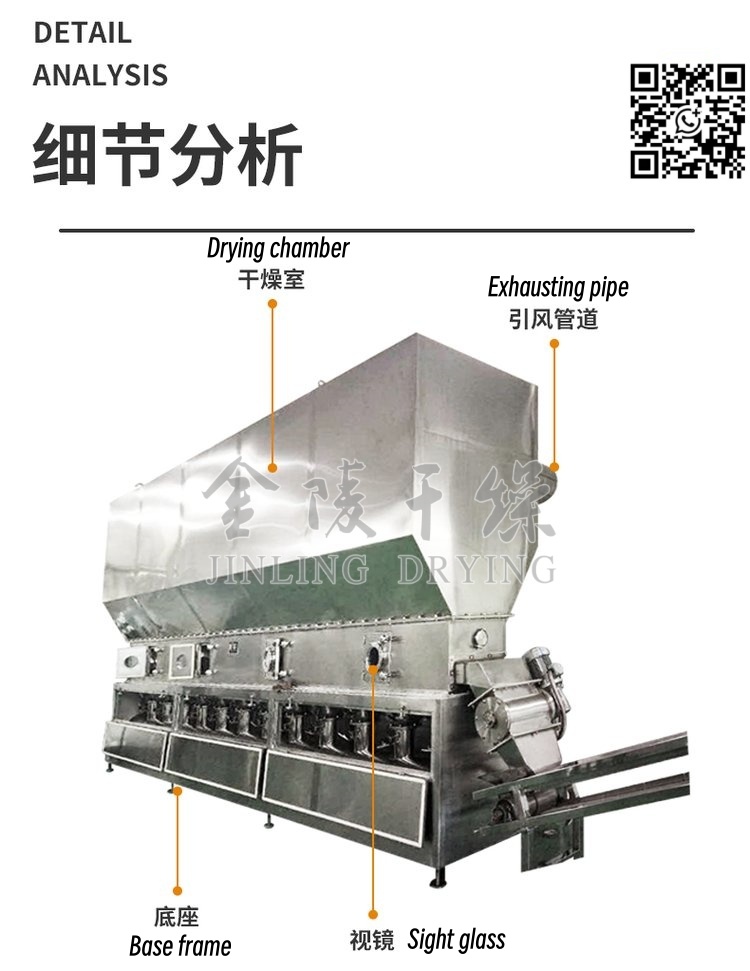


Fluid bed drying is commonly used for:
Tablet granules
Active pharmaceutical ingredients (API)
Herbal extracts
Medical powders
GMP compliance
Uniform moisture content
Reduced contamination risk
Applications include:
Milk powder
Coffee powder
Seasonings
Starch products
Protein powder
Preserves nutritional value
Improves product consistency
Fast drying process
Fluid bed dryers process:
Resins
Pigments
Fertilizers
Catalysts
Polymer powders
Continuous operation
High production capacity
Excellent heat transfer
The rapid growth of lithium battery production has increased demand for advanced drying solutions.
Applications include:
Lithium carbonate
Lithium hydroxide
Cathode materials
Anode materials
Benefits:
Precise moisture control
Inert gas drying capability
Vacuum-assisted options
Feature | Benefit |
|---|---|
Uniform Drying | Better Product Quality |
Low Energy Consumption | Lower Operating Cost |
PLC Control | Easy Operation |
Stainless Steel Construction | GMP Compliance |
Modular Design | Easy Expansion |
Country:
India
Capacity:
500kg/h
Material:
API Powder
Country:
Vietnam
Material:
Seasoning Powder
Country:
Russia
Material:
Pigment
✓ 20+ Years Manufacturing Experience
✓ ISO9001
✓ CE Certificate
✓ Export to 80+ Countries
✓ Professional R&D Team
✓ OEM Service
✓ FAT Testing
✓ Installation Support
Fluid bed dryers are suitable for many materials, including:
Pharmaceutical granules
Powdered chemicals
Food additives
Protein powders
Coffee and tea extracts
Fertilizers
Pigments
Lithium battery materials
Mineral powders
Sticky or highly cohesive materials may require special design modifications.
A fluid bed dryer is ideal for fine powders and granules that require uniform drying and precise temperature control. A rotary dryer is better suited for large particles, minerals, and bulk materials. Fluid bed dryers generally provide higher drying efficiency and shorter residence time.
Fluid bed dryers are commonly used in:
Pharmaceutical industry
Food processing industry
Chemical industry
Battery material manufacturing
Fertilizer production
Mineral processing
Environmental protection and sludge treatment
The drying temperature usually ranges from 60°C to 250°C, depending on the material properties and process requirements. Heat-sensitive materials are typically dried at lower temperatures, while inorganic materials can tolerate higher temperatures.
JLDryer fluid bed dryers can be designed with:
Steam heating
Electric heating
Natural gas heating
Thermal oil heating
Hot air furnace systems
The heating method is selected according to energy availability, operating cost, and process temperature requirements.
Yes. We provide customized fluid bed drying systems based on:
Material characteristics
Initial and final moisture content
Required capacity
Available heating source
Explosion-proof requirements
GMP or food-grade standards
Automation level (PLC/HMI)
Our fluid bed dryers are available from 10 kg/h laboratory units to 5,000 kg/h industrial systems. Continuous fluid bed dryers can be designed for even larger production capacities.
Yes. The dryer can be manufactured in:
SS304
SS316L
Duplex stainless steel
Carbon steel (for non-corrosive materials)
SS316L is recommended for pharmaceutical, food, and corrosive chemical applications.
Fluid bed dryers are considered highly energy efficient because the fluidized state provides excellent heat transfer. Energy consumption is typically 20–30% lower than many conventional drying methods, depending on the material and operating conditions.
Yes. JLDryer provides:
Installation guidance
On-site commissioning
Operator training
Process optimization
Spare parts supply
Remote technical support
Our equipment can be supplied with:
ISO9001 certification
CE certification
Material certificates
Welding inspection reports
FAT (Factory Acceptance Test) documents
GMP-compliant documentation (optional)
Standard models are usually delivered within 50 days. Customized fluid bed drying systems typically require 60-80 days, depending on the design complexity and project scope.
To receive an accurate quotation, please provide the following information:
Material name
Particle size
Initial moisture content
Final moisture content
Required processing capacity (kg/h)
Preferred heating method
Installation country
Any special requirements (GMP, explosion-proof, automation, etc.)
Email:lydia@jinlingdry.com
Whatsapp:008613776858224
Wechat:1024628175


